Interview with Michele Franzese
Founder, SCAI Comunicazione

Rome Future Week, our pioneering event which aims to transform and redefine Rome for a future of innovation and technology, is increasingly acting as a connector between communities that often move in parallel: start-ups, corporations and institutions.
In Italy and Europe, one of the most relevant trends we are seeing is a clear maturation of open innovation. It is no longer treated as a special, isolated initiative, and in many companies, it is starting to integrate with product and sales functions. This will ultimately assist in its adoption, bringing measurable outcomes, industrial requirements and real go-to-market paths.
Industrial transformation is becoming the real engine of innovation priorities, and ecosystems that connect universities, technical institutes, corporates and public stakeholders will move faster than those that rely only on funding and acceleration.
Rome is traditionally institutional and cultural, but it is now progressively redefining itself as a city where industrial innovation and entrepreneurship can grow. We are seeing a stronger alignment of public resources and strategic projects, with more effective public-private governance than in the past. Rome’s opportunity is to become a “city-scale platform” where innovation is not only discussed, but coordinated and tested through a network of places and actors.
Removing barriers to progress
In our experience, the main barrier to scaling has not been only capital. In Rome, very often the bigger issue was the lack of sufficiently ambitious start-up projects tightly connected to real industrial needs. When problems are not industrial-grade, capital struggles to find its way, and collaboration remains fragmented.
Another recurring barrier is the last mile between a good solution and real adoption: long decision cycles, procurement complexity, regulatory constraints and integration challenges. As more industrial players engage with initiatives like Rome Future Week, the conditions improve for better matchmaking, structured pilots, clearer KPIs, and trusted intermediaries.
Building compliant solutions
Within this kind of ecosystem-building effort, a global engineering and certification company like RINA has a natural and strategic role. It represents an essential dimension of innovation that is often underestimated: translating ideas into reliable, safe, compliant and scalable solutions.
In many sectors, engineering, certification and standards are enabling conditions for adoption and market access. RINA can therefore operate as a bridge between start-ups and industry, helping start-ups understand real constraints and required standards, and helping corporates and public stakeholders evaluate innovation with method and credibility.
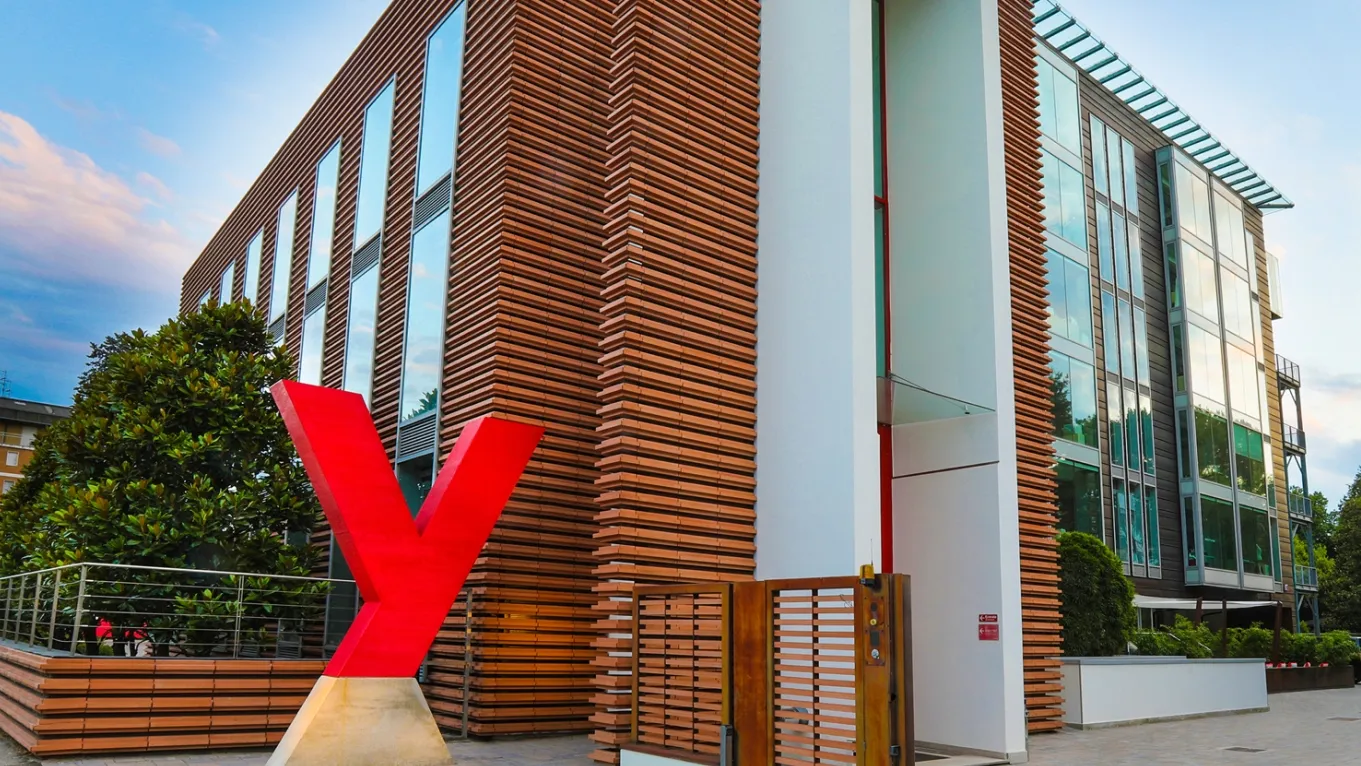
This is also why RINA’s Open Innovation Hub in Rome has strong strategic value. For the city, it is a concrete signal that Rome can host industrial innovation, not only discuss it. For Italy’s broader industrial transformation, it can help connect local talent and entrepreneurial energy to global industrial networks, while strengthening capabilities around validation, compliance and scale.
Energy transition a top priority
The strongest potential for collaboration between start-ups and established players like RINA lies in domains where innovation must be both fast and dependable. This includes energy transition and sustainable infrastructure, because solutions require engineering rigour, standards and verification to scale safely.
Digital transformation is equally central, especially where critical systems, cybersecurity, data governance and interoperability are involved. Smart cities offer large opportunities when approached pragmatically, focusing on measurable improvements in mobility, maintenance, resilience, safety and citizen services. Across these areas, data and AI will be powerful accelerators.
A multi-year approach
Looking ahead, Rome can strengthen its role within European innovation networks by leveraging its convening power and institutional connectivity through structured, multi-year collaborations. The partnerships that matter most are not episodic.
They are alliances between corporates, hubs, universities and public administrations that co-design programs, share infrastructure and datasets where possible, and create stable pathways for talent and projects. Rome Future Week can work as a platform that makes these collaborations visible and actionable.
Beyond Italy, the Mediterranean and African regions are increasingly central to Europe’s future, from energy and logistics, to climate adaptation, urbanisation and infrastructure. Rome has a natural potential to act as a bridge, but the approach needs to be pragmatic and mutually beneficial: joint challenges, shared pilot projects, talent exchange and capacity-building in sectors such as sustainable infrastructure, energy systems, ports and logistics, and digital public services.
In this scenario, Rome Future Week can provide the convening and visibility layer that attracts diverse stakeholders and creates momentum, while RINA’s Open Innovation Hub can provide the technical and industrial layer that makes collaboration credible, operational and sustainable over time.
Michele Franzese is a Creative Director, impact entrepreneur and event maker. Michele has spent the past 20 years helping companies communicate through SCAI Comunicazione, an agency specialised in events and strategic communication. In 2021 he published “Human Digital Events” (Maggioli) and in 2024 he edited the university handbook “Essere Startupper” (McGraw Hill). He regularly teaches and speaks on entrepreneurship and innovation in conferences, courses and Master programs, and he is currently a lecturer in Startups and Spin Offs at Link Campus University in Rome. In 2023 Michele launched Rome Future Week®, a future-focused format born in Rome that is evolving into a national ecosystem, with upcoming stops in Turin, Florence, Taranto and Cagliari. His next challenge is to explore and share the opportunities and critical questions emerging around artificial intelligence.